Laster...
Kun for grossist- og bedriftskunder. Vennligst logg inn eller opprett en konto for å handle.
Se våre produkter
Se våre produkter
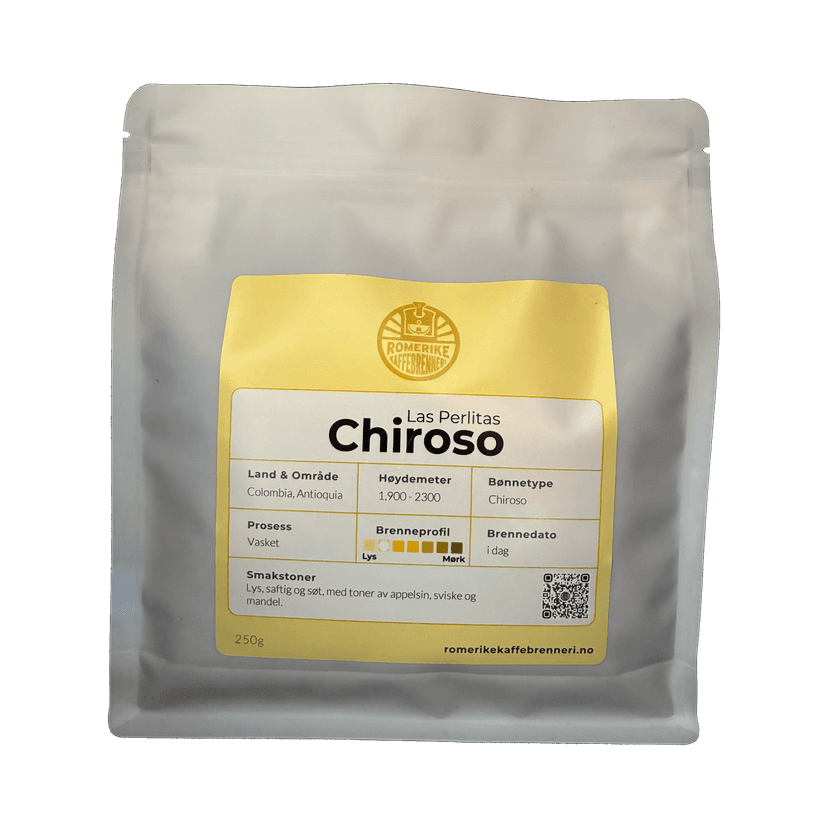
In Spanish, Las Perlitas means “Little Pearls” and throughout the harvest, it’s quite common that small-holders in Colombia produce lots that aren’t large enough to be exported on their own. However, the quality is often just as good (or better) than samples received from larger lots. As such, we buy all coffees, regardless of size and create a larger, export-size lot based on cup score and profile. The result is Las Perlitas Chiroso; a celebrated Washed coffee of various small Chiroso lots from producers in Urrao, Antioquia, whose farms range in elevation from 1,900 to 2,300 m.a.s.l. Las Perlitas is a clear example of how we can help smallholder farmers receive a fair payment for their quality. Our selection procedure is very strict, and we use the same standard with each micro-lot or constructed lot. Every small lot is individually cupped various times before being included within the main lot. In addition to cup quality, each coffee must meet strict physical requirements, based on our guidelines for moisture content and water activity.
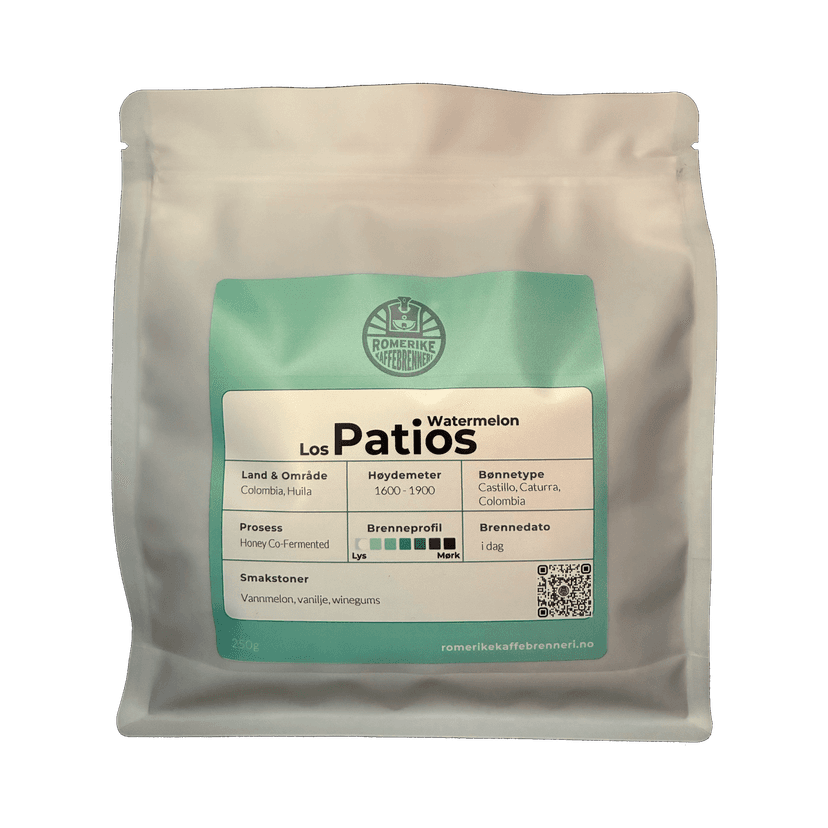
Delving into Co-fermentation Processes This fermentation and absorption phase lasts for 2 days until the coffee is drained and placed to dry at Los Patios for between 12 –16 days, where it is monitored and rotated constantly to ensure an even drying. At The Coffee Quest, cup quality is paramount, but bean quality is also of utmost importance, and embryo preservation was one of our key goals while developing processes. We are thrilled to have found success again with Peach, while also preserving the physical quality of the beans. Los Patios Today — TCQ’s Coffee Lab Currently, Los Patios stands as our primary Coffee Processing and Research facility, equipped with a lab, trained personnel, and drying patios. The diligent efforts of our R&D Department resulted in successful proprietary processes, such as Solsticio, Mellow Yellow and Scarlet. We hold high hopes for the future and the untapped potential that Los Patios continues to unveil, allowing us to elevate everyone across the supply chain.
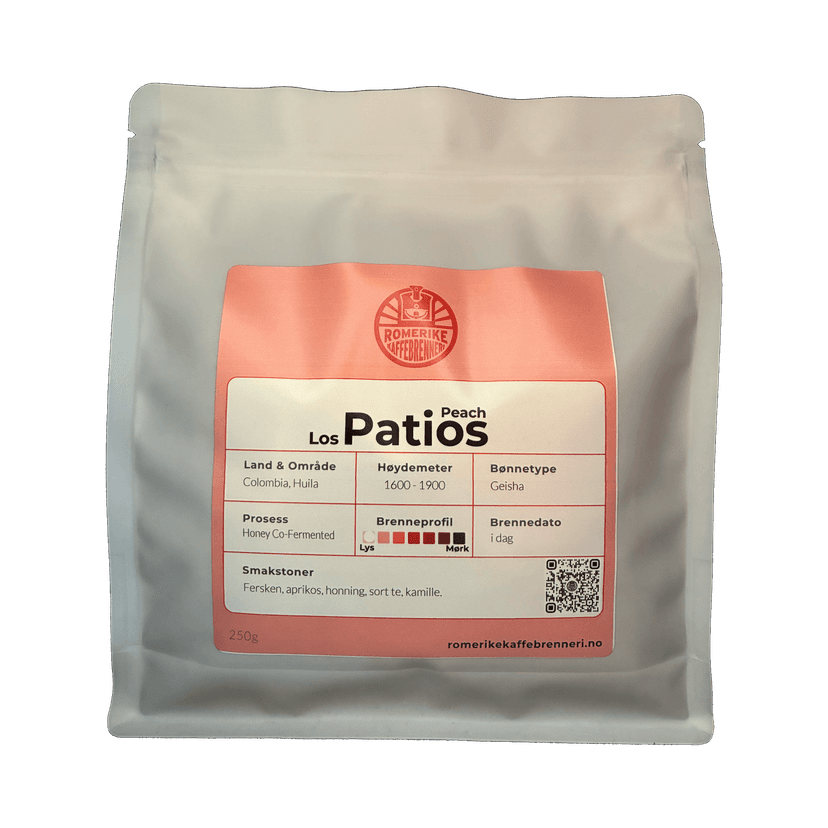
Delving into Co-fermentation Processes This fermentation and absorption phase lasts for 2 days until the coffee is drained and placed to dry at Los Patios for between 12 –16 days, where it is monitored and rotated constantly to ensure an even drying. At The Coffee Quest, cup quality is paramount, but bean quality is also of utmost importance, and embryo preservation was one of our key goals while developing processes. We are thrilled to have found success again with Peach, while also preserving the physical quality of the beans. Los Patios Today — TCQ’s Coffee Lab Currently, Los Patios stands as our primary Coffee Processing and Research facility, equipped with a lab, trained personnel, and drying patios. The diligent efforts of our R&D Department resulted in successful proprietary processes, such as Solsticio, Mellow Yellow and Scarlet. We hold high hopes for the future and the untapped potential that Los Patios continues to unveil, allowing us to elevate everyone across the supply chain.

Liker du det litt mørkere? Romerike Kaffebrenneri har en kaffe til deg! Kaffen er ekstra mørk men har fortsatt tatt være på smaken som er i kaffen. JO det smaker litt brent men med smaken av mørk sjokolade, karamelisert sukker og brente nøtter. Munnfølelsen er fyldig med et preg av nougat og et hint av kakao.

Owned and operated by the Ramirez-Navarro family, their story begins with Mr. Alexis Ramirez, a lifelong farmer whose passion for the land and dedication to agriculture continues to guide them every day. Though Mr. Alexis passed away a few years ago, his vision and values remain the heart of their work — inspiring them to preserve and grow the family legacy he built with such care. In 2015, the family took a bold step forward by building their own micro-mill, “Los Campos.” This milestone allowed to process their own coffee, ensuring full control over quality and traceability while reducing dependence on the cooperative system. Direct trade had long been a dream for the family, which is why their collaboration with Grounds represents such an important achievement. The main coffee varieties are Caturra and Catuai, but they are now exploring new horizons by planting F-1 Hybrid varieties such as Esperanza, Milenio, and Centroamericano—a step toward greater diversity and sustainability. Gesha has been planted at the highest point of the farm, at 2,000 meters, nestled within a forested area that provides ideal growing conditions. At Los Campos, they experiment with a range of processing methods, from classic high-quality washed coffees to innovative fermentation techniques, both aerobic and anaerobic.

When Gidhe Berhe created Limmu Kossa in 2000, he did so with the vision of contributing something to the region. He knew coffee could offer great opportunities, but he understood that he was a foreigner from a different part of Ethiopia coming to a land of proud and independent Oromo people. Gidhe didn’t just care for the native trees and nourish the soil in a regenerative paradise, but developed a micro-economy in the region that benefited everyone. Gideh provided seedlings and assistance to surrounding farmers and developed the community projects villagers asked for: a church, schools, medical centers, even roads. Enter Abiy. Translator, development agent, Dutch resident but with local Oromo roots… He became interested in coffee, and in this particular project, in 2004 when he met Gidhe. Our Ethiopia project is founded in full on the harmony between Abiy and Gidhe. If Gidhe is the local leader, Abiy is the ambassador. Without Gidhe, there would be no island of hope in the region; without Abiy, nobody here would know about it... Today, Limmu Kossa's efforts have spread to another region: The Sheka Forest Biosphere Reserve, one of the most sustainable coffee projects we've encountered. Additionally, neighbours are now taking their coffee quality to the next level, exporting to the international market for the first time through us. Ethiopia and our choice for Gidhe’s estate This was the first large estate This Side Up worked with, and it took some mental adjustment to make this decision. When in 2013 we founded our company, we saw ourselves as the agent for farmers who do not have easy access to the international specialty market. So, at least in Africa, we always tried to work with farmer cooperatives directly. Although these coops can be less efficient managerially, if run well, they develop according to the combined will of their member farmers. In Congo and Tanzania, and in Rwanda especially, we have seen only farmer-driven upgrades in the last four years, with no monitoring or lack of motivation - simply because of the democratic dynamics of the cooperative structure. For this reason, private estates were never really on our radar - they’re established enough and will easily find buyers without our help, was our reasoning. That was until Sara convinced Lennart to listen to Giday’s, and his company Limu Kossa, story. Sure they had an established business with state of the art equipment, and sure they had sold to specialty importers before - but appearances seldom tell the whole story. In a country where farmer cooperatives have only been granted permission to export independently since March 2017, the demands of the specialty coffee industry are still relatively unknown— unlike the coops we work with in our other African origins. For This Side Up, working with them with limited resources would be very risky. ARC Youth Ambassador and former Technoserve consultant from Ethiopia, Fitsum Bekere Ligdi, told us: “Most coops are not well managed and every [smallholder] farmer produces their coffee in a different way, so to make it conform to speciality standards, it needs more effort. But with a single farm, you only need the commitment of the owner.” Fitsum immediately added: “the only problem with single farms is they tend not to allocate the premium price efficiently for the main purpose”. His experience with Technoserve showed estates too could do much more to upgrade their processing, support surrounding farmers and become ecologically sustainable. One might add that in Ethiopia, there is a bit of a resource curse. Because the intrinsic (genetic) coffee quality is higher than literally anywhere else on Earth, processing standardisation has not been a priority nearly as much as in countries like Nicaragua or Rwanda - where our partners time every process to the minute to create specialty coffee. In Ethiopia, most farmers produce an 85+ coffee regardless of their attention to detail. Processing mistakes (or even lack of traceability and social justice) are forgiven easily - simply because the coffee is so damn good - and therefore buyers will come anyway. Of course, most of these buyers are not loyal and will easily switch if for any reason the coffee from one region is better than the other - one of the reasons that coffee farming, even in the best naturally endowed country in the world, is still risky and left to the country's poorest. So what to do? In a nutshell, coops are inexperienced and don’t deliver consistent quality and estates can’t be trusted to spend premiums fairly. When Sara introduced Lennart to Abiy and Limu Kossa at the World of Coffee in Budapest, she knew that he might hold the answer. The best of both worlds: Limu Kossa in Galeh Limu Kossa was founded by Giday Berhe, who started his coffee career as a trader in 1993 in Jimma. He then opened a wet and dry mill station with the aim to supply the central coffee market with quality coffee. In the early 2000s, he decided to establish his own farm in the village of Galeh in Jimma and from the outset establish meaningful relationships with neighbouring smallholder producers. Not only does he spend much of his profit on health care and schooling for the community, he actively teaches the farmers to upgrade their farms and techniques to eventually be able to process and export their coffee for high premiums as well. Here was the hybrid we were looking for, a private estate with the heart of a producer cooperative. His commitment to produce quality coffee while at the same time supporting his local community has even granted him the title of "Abba Ollie" or “he who uplifts”. It then dawned on us that we had heard similar titles for some of our other parters: Limu Kossa in fact resembles the structures we’re developing in Colombia and Nicaragua. All are private and well-organised support, milling and export entities that exist to uplift the lives of smallholder farmers. In the end, to cut a very long story short, it turned out we did not have to sacrifice any of our ideals by working with Limu Kossa - and better still, are simply continuing a development path that we have been on in other countries for several years. More exciting still, we have the chance to link the fates of all these local "Abba Ollies" by encouraging exchange between them. Limmu Kossa and Us Limu Kossa is an established played in Jimma and known for both quality and commitment to social programs to improve livelihoods in the community. However, they have been struggling with marketing their coffee consistently to specialty buyers. Like us, they were looking for a partner who is willing to support them in their long-term plans to establish links with surrounding farmers and to allow them to export their coffee too. Through our work with Expocamo in Nicaragua and Argote in Colombia, we have the experience to set up such programs - but more exciting still, we can link Giday to these partners directly and provide very effective network support. In 2017 we purchased our first pilot shipment of 35 bags in stock, and when we noticed that halfway through the season the coffee was still as bright, floral and cherry-sweet as ever— we where not surprised by the overwhelmingly positive responses. For next season, Gidhe and Abiy set up six microplots according to microclimate, soil and altitude, and planned a mini auction for the best of the harvest. Later on, in 2018, when Lennart visited the Limmu Kossa Estate they finished the microregion lot program (divided into Betella, Suki and Suromo - parts of the form), met the three first outgrowers whose coffee we will separate and offer as distinct lots from now on. They also created a cascara protocol and fine-tuned the natural drying process. The level of professionalism with which the farm is set up and maintained from an agro-forestry point of view became evident to us. It was also quite evident that the respect the locals have for Abba Ollie (which we have been writing about for two years but never experienced first hand!) goes deep: the kind of community cooperation model we aim to see grow: people flock to the estate for work not just for the higher prices they receive, but for the good working and temporary living conditions at the farm. Lastly and most excitingly, on that trip, we made plans to create an on-site cupping lab, maintained by local teens who will receive sponsored Q-grading training. In 2020, Gideh’s efforts expanded to a quite a different region in Ethiopia: Sheka, located in the southwest highlights, about 370 kilometers from Jimma, located in the Sheka Forest Biosphere Reserve, one of the few in the world protected by the UN. This reserve includes forests, bamboo thickets, wetlands, agricultural land, rural settlements, and towns. It covers a unique biogeographic unit extending from cold and very wet highlands to hot lowland areas. Added to this, the firs international export of Sultan Bawari was accomplished with success.

Håndplukket, forhåndssortert, fløtet, pulped, vått-fermentert i 12 timer, bløtlagt og vasket, tørket på hevede senger. Alt under oppsyn av gårdeieren, Giday. Så blir kaffen sendt til Tyskland for dekoffeinering.

Håndplukket, forhåndssortert, fløtet, pulpet, våtfermentert i 12 timer, bløtlagt og vasket, tørket på hevede senger – alt unde oppsyn av gårdseieren, Giday. Så blir kaffen sendt til Tyskland for dekoffeinering.

Jorge Elías Rojas er en kaffedyrker i fjerde generasjon på vei til å gjøre historie i kaffeindustrien. Gården hans, Finca El Jardin, ligger i Planadas, Tolima, Colombia, og er et tilfluktssted for et mangfold av kaffesorter. Med et gjennomsnitt på 4 000 Caturra-, 7 000 Yellow Colombia-, 1 000 Pink Bourbon-, 800 Wush Wush- og 1 000 Geisha-kaffetrær fordelt på 3 hektar jord, streber Jorge alltid etter å forbedre kvaliteten på kaffen sin og samfunnet sitt. Jorges reise innen kaffe begynte da han var 13 år gammel. Moren hans ga ham muligheten til å jobbe på gården, og kort tid etter fant han seg selv også med jobb som sekkebærer hos en av de lokale foreningene i byen. Etter hvert som han vokste i erfaring og lærte alt han trengte å vite for å drive en kaffegård, arvet han en del av farens gård, og kjøpte en del av naboens land, og grunnla det som nå er kjent som Finca El Jardin. Siden 2016, da Jorge ble introdusert for spesialkaffe, har har eksperimentert med nye måter å forbedre koppkvaliteten på. Han utviklet sin egen fermenterings- og tørkeprosess som, som alltid, starter med et veldig strengt utvalg av kaffebær under høstesesongen.

For denne kaffen foregår gjæringen over 48 timer i “big bags.” Med kapasitet fra 500 til 1000 kg eller mer er big bags ideelle for storskala operasjoner. I dag bruker mange produsenter, inkludert Otávio, dem til å gjære kaffe, da de gir rikelig med plass til å behandle større mengder uten å gå på kompromiss med kvaliteten. Denne allsidigheten gjør big bags til et verdifullt verktøy i kaffens produksjonskjede. Etter gjæringen tørkes kaffen på en patio i 15–20 dager.

Owned and operated by the Ramirez-Navarro family, their story begins with Mr. Alexis Ramirez, a lifelong farmer whose passion for the land and dedication to agriculture continues to guide them every day. Though Mr. Alexis passed away a few years ago, his vision and values remain the heart of their work — inspiring them to preserve and grow the family legacy he built with such care.

Natural Anaerobic El Moral kommer fra Costa Rica, og viser Don Alexis Coffee sin engasjement for innovasjon innen kaffebehandling. Denne kaffen gjennomgår en anaerob gjæringsprosess, som beriker dens smaksprofil med unike egenskaper. Forvent å bli henrykt over noter av moden frukt, florale hint og en fløyelsmyk munnfølelse. Opplev essensen av costaricansk kaffe og kaffehåndverk fra Romerike Kaffebrenneri med hver overbærende slurk av dette eksepsjonelle brygget. Carbonic Maceration er en prosess som ofte brukes i vinproduksjon, og den blir også stadig mer populær innen kaffebehandling. I denne metoden legges hele kaffebønner med fruktkjøtt i en forseglet beholder hvor karbondioksid tilføres, noe som skaper et anaerobt miljø. Dette miljøet oppmuntrer til gjæring i de intakte kaffekirsebærene. Fermenteringsprosessen kan forbedre smaksprofilen til kaffen ved å endre den kjemiske sammensetningen til bønnene. Etter gjæring blir fruktkjøttet fjernet og kaffen tørket. Resultatet er ofte en kaffe med unike fruktige, florale og komplekse smaker.

Raumariki er Romerike Kaffebrenneri sin sesongblend. Kaffe i blendet varier, men det har i hvert fall kaffe fra Søramerika og Afrika.

La Lima located in Cacerio with elevation of 1700 and 1800 MASL is home to highly technical producers like Walter Corrales. Flavours native to La lima are typically characterized as floral, aromatic and highly intense. The technological development in the last few years in that area has made this coffee attractive in the market. With a potential for achieving high qualities, Walter Corrales, his cousins and brother in laws and the Montesa family are responsible for the coffees you taste from La lima.

The producers of Keramo live high in the beautiful Bombe mountains and have an out-grower relationship with our Ethiopian partner, Daye Bensa. The out-grower group consists of about 1,500 farmers in various parts of the mountain range, and these producers deliver their coffee to Daye Bensa’s Keramo Adara Washing Station. The main varieties are JARC 74112 & cultivated local varieties. Due to the staggering elevations of up to 2,300+ meters, the beans are very dense, with heavy concentrations of the smaller screen sizes (the majority is at 13-14). The Washed Keramo Adara is traditionally wet fermented for between 36 and 72 hours, and then dried on African beds for about 12 to 15 days, until the coffee reaches approximately 10% moisture. During peak sun, the beds are covered to prevent over drying. The Natural Keramo Adara is dried on African beds, with clean plastic mesh and sheet for about 14 to 18 days. The cherries are locally hulled into unsorted natural beans, and transported to Addis for final sorting afterwards.

The producers of Keramo live high in the beautiful Bombe mountains and have an out-grower relationship with our Ethiopian partner, Daye Bensa. The out-grower group consists of about 1,500 farmers in various parts of the mountain range, and these producers deliver their coffee to Daye Bensa’s Keramo Adara Washing Station. The main varieties are JARC 74112 & cultivated local varieties. Due to the staggering elevations of up to 2,300+ meters, the beans are very dense, with heavy concentrations of the smaller screen sizes (the majority is at 13-14). The Washed Keramo Adara is traditionally wet fermented for between 36 and 72 hours, and then dried on African beds for about 12 to 15 days, until the coffee reaches approximately 10% moisture. During peak sun, the beds are covered to prevent over drying. The Natural Keramo Adara is dried on African beds, with clean plastic mesh and sheet for about 14 to 18 days. The cherries are locally hulled into unsorted natural beans, and transported to Addis for final sorting afterwards.

Las Perlitas (The Little Pearls) is a clear example of how we can help smallholder farmers receive a fair payment for their quality. Our selection procedure is very strict, and we use the same standard with each micro-lot or constructed lot. Every small lot is individually cupped various times before being included within the main lot. In addition to cup quality, each coffee must meet strict physical requirements, based on our guidelines for moisture content and water activity. The first time a lot is cupped is when the producer brings a sample to our buying station. Once approved, the producer will then bring the lot down to the warehouse where it will be cupped again, taking a sample from each sack to ensure consistency. After final approval, the parchment coffee is packed in Grainpro bags and remains untouched until the entire lot is milled in Medellín. You might already know that Colombia has a tropical climate with high humidity which makes it extremely difficult to produce Naturals. The only way to get the same fruity flavours that resemble those of Naturals is to play with extended or other creative fermentations before washing. The variations of fruity flavours of our specialty lots are created by manipulating different variables before, during and after the fermentation process, such as cleanliness, temperature, batch size, fermentation time and choices between dry or wet fermentations and more and more the addition of microorganisms. The time our coffee spends in the tanks and on the drying tables is usually much longer than for commercial coffee, but differs per farmer as climatic influences and logistical issues play a role. On average, Las Perlitas coffees ferment from 24 to 48h and sometimes up to 72! Drying time is around 7-14 days.

Beskrivelse: Jesus has been a coffee farmer all of his life. He comes from a family of farmers and lives with his mother, wife and brother. They all work together to maintain the coffee fields and process the coffee at their own small mill. He has been selling coffee to the FNC for most of his life but after meeting Juan Pablo, found out that his coffee is of exceptional quality. This is mainly due to his meticulous way of working. He has become very interested in improving quality, even more now that his first direct export received first prize in our cupping competition. He made almost identical drying beds to those at Argote and has started making high quality washed cascara as well. He is healthy again after surviving cancer and chemotherapy some years ago, making his feat of high quality production even more astounding.

Jesus has been a coffee farmer all of his life. He comes from a family of farmers and lives with his mother, wife and brother. They all work together to maintain the coffee fields and process the coffee at their own small mill. He has been selling coffee to the FNC for most of his life but after meeting Juan Pablo, found out that his coffee is of exceptional quality. This is mainly due to his meticulous way of working. He has become very interested in improving quality, even more now that his first direct export received first prize in our cupping competition. He made almost identical drying beds to those at Argote and has started making high quality washed cascara as well. He is healthy again after surviving cancer and chemotherapy some years ago, making his feat of high quality production even more astounding.

Som de fleste av Churupampas samarbeidende bønder, brukes organisk kompost og naturlige gjødselmidler på gården. I tillegg til kaffedyrking, dyrker Walter pasjonsfrukt som han også eksporterer.

Clever Drippers er laget med Eastman Triton BPA-fri plast, slik at du får en solid og slitesterk brygger med et herlig nytt ergonomisk håndtak. Clever Dripper er en filterholder med stopp mekanisme i bunnen. Den er laget med Eastman Triton BPA-fri plast, slik at du får en solid og slitesterk brygger med et herlig nytt ergonomisk håndtak. Den gir all den fantastiske smaken av brygging med full nedsenkning blandet med filtreringen fra pour-over-brygging. Man bruker et vanlig kaffefilter, nykvernet kaffe og kokt vann, og venter noen minutter mens kaffen ekstraheres. Deretter settes holderen rett på koppen eller en kanne. Brygget slippes ned i beholderen under og kaffen er klar! Man kan velge om man vil brygge opptil 500 ml eller kun nok til en kopp av gangen. Du kan prøve deg frem med ulik kaffe dosering og ekstraksjonstid. Bruk vanlig kaffefilter i størrelse 4, det er den vanligste størrelsen som bl.a. brukes til Moccamaster.

Karamellisert hvit håndlaget sjokolade Vi rister tørrmelken i ovnen, slik at melkesukkeret karamelliseres. Så lager vi hvit sjokolade av 1/3 kakaosmør, 1/3 sukker og 1/3 karamellisert tørrmelk. Da får du en blond sjokolade med deilige toner av karamell. Nettovekt ca 60 g. Innhold: Kakaofett, sukker, helMELKspulver, SOYAlecitin https://www.nittedalsjokoladefabrikk.no/produkt/karamellisert_hvit/

Mørk melkesjokolade med bringebær. Innhold: Melkesjokolade (Kakaobønner, helMELKspulver, sukker, kakaofett, lecitin(SOYA), bringebær, bringebærcrisps (glukosesirup, sukker, bringebær (25%), natriumalginat (fortykningsmiddel)). Ca 50 g. https://www.nittedalsjokoladefabrikk.no/produkt/mork-melkesjokolade-med-bringebaer/

Mørk melkesjokolade av kakaobønner fra Venezuela med spesielt utvalgte kaffebønner fra Romerike kaffebrenneri – norgesmester i kaffebrenning. Kaffebønnene er kjørt i maskinen sammen med kakaobønnene for å gi sjokoladen en deilig smak av kaffe. På toppen har vi strødd litt kakaonibs for å gi den litt crunch. En av våre favoritter! Nettovekt ca 60 g. Innhold: Kakaobønner, kakaofett, sukker, helMELKspulver, kaffebønner, SOYAlecitin.

300 stk filter, spesielt utviklet for Delter Coffee Press. ~6.5cm diameter Filtrerer ut partikler og kaffegrut Kan komposteres (bionedbrytbar)